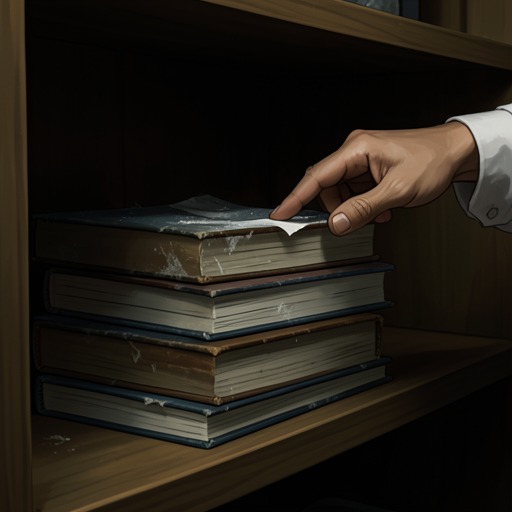
The near-destruction of Julian Carax’s literary works
The Shadow of the WindThe near-destruction of Julian Carax’s literary works is both a literal assault on the novelist’s remaining books and a struggle over whether his identity can survive without them. Carax’s novels move through a chain of neglect, attempted purchase, fire, rescue, concealment, and republication. Their material scarcity feeds their market value, but their survival matters for a more intimate reason: Nuria Monfort understands the books as the place where Carax’s self has endured.
Publication and Neglect
Between 1928 and 1936, Cabestany published eight of Carax’s novels, despite their poor commercial prospects. According to Isaac, the best-selling title, The Red House, sold about ninety copies. The publisher made his money elsewhere: catechisms and inexpensive sentimental novels featuring the provincial heroine Violeta LaFleur sold far better. Carax’s books were therefore not the profitable center of the firm’s business, but Cabestany continued publishing them all the same.
Cabestany’s publishing choices became more precarious as his health and finances declined. His eldest son took over the firm in 1936, and the business collapsed in less than a year. The son considered selling the company’s backlist for pulp, persuaded that photo romances and Mein Kampf would create a demand for cellulose. That plan threatened not just Carax’s books but the physical stock of the publishing house’s past.
The books also entered the rare-book market as their circulation dwindled. When Daniel brought his copy to Gustavo Barceló, the bookseller examined its condition and publication notices with practiced care. Barceló offered two hundred pesetas, a considerable sum, and then raised the offer, but Daniel refused to sell. Years later, Barceló continued making offers, telling Daniel that antiquarian booksellers considered a Carax especially valuable in Paris. Daniel still declined, keeping the novel rather than treating it as an investment.
The Offer and the Fire
Shortly after Cabestany’s son assumed control, a visitor offered three times the market value for the remaining stock of Carax’s novels. Isaac inferred that the offer was made to destroy the books, and the visitor’s name was Lain Coubert—the name of a character in The Shadow of the Wind. The son demanded more than Coubert had proposed, and Coubert withdrew. A few days later, shortly after midnight, the Cabestany warehouse in Pueblo Nuevo burned to its foundations. Nearly all of Carax’s books were lost with it.
Nuria’s account connects the fire to a more disturbing pattern. After Carax disappeared, someone contacted the publishers to acquire the remaining copies. Later, Coubert appeared at the firm and offered to buy the stock. Nuria heard the conversation in Cabestany’s office: the visitor’s voice matched that of the man who had telephoned while claiming to be Jorge Aldaya. When the son tried to raise the price, Coubert said he would consider the offer; that same night, the warehouse burned. The sequence makes the fire appear less like an accidental end to a failing business than the culmination of a campaign against Carax’s books.
The campaign belongs to the wider mystery of Carax’s disappearance. Fermin’s account says that, after a duel in Père Lachaise cemetery on the morning of his wedding, Carax vanished; he supposedly returned to Barcelona in 1936, at the outbreak of the Civil War, and was later found dead in the street. The figure calling himself Lain Coubert then threatened to obliterate what remained of the novelist and destroy his books forever. The name, borrowed from Carax’s last novel, and the reported fire-disfigured appearance made the threat seem to step out of the fiction it sought to erase. Nuria, in turn, recognized the voice as Jorge Aldaya’s, a suspicion that complicates the identity of the would-be destroyer without making the books’ danger any less real.
Nuria’s Rescue and the Meaning of the Books
Before the fire, Cabestany’s secretary acted on a premonition: she went to the warehouse and took one copy of each Carax title. She had corresponded with Carax, and over the years their correspondence had become a friendship of sorts. Unlike the rest of the publishing house—and, Isaac suggests, almost everyone in Barcelona—Nuria had read Carax’s novels. After the fire, she hid the rescued books in the Cemetery of Forgotten Books. Her intervention did not save the warehouse or restore the lost stock; it preserved a surviving set that the person seeking Carax’s books could not reach.
Nuria’s explanation gives this rescue its central significance. She says Carax lived in his books, and that the body found in the morgue was only part of him: his soul remained in his stories. When she asked who inspired his characters, Carax answered that no one did, because all his characters were himself. On this understanding, destroying the books would mean more than suppressing a writer’s reputation. It would attack the surviving forms in which he had placed his own identity. Nuria’s preservation of the novels is therefore at once practical—she saves copies from the fire—and an act of protection for the person she believes is still present in them.
She refuses to settle on a single explanation for why books are burned, naming stupidity, ignorance, and hatred as possibilities. Yet the story supplies a more specific implication: if someone wanted to destroy Carax, the books and characters through which he persisted would also have to be destroyed. The attempt to remove the novels from circulation thus makes their meaning more visible. The threat treats literature as a vulnerable physical object; Nuria treats it as a repository of a life that cannot be reduced to the body officially identified as dead.
Scarcity, Rumor, and the Market
The destruction of most copies paradoxically increased the value and notoriety of those that remained. After Barceló boasted to collectors that he had located a copy of The Shadow of the Wind, offers arrived from London, Paris, and Rome in less than two months. Carax’s mysterious flight from Paris after a bloody duel, rumors of his death in the Spanish Civil War, and the legend of a faceless figure searching for his books and burning them all contributed to the rising interest and price. The book’s market value grew not simply from its literary contents but from the story of its disappearance and pursuit.
Daniel’s refusal to sell provides a contrast to this collector-driven valuation. Barceló’s offers and the international demand turn the surviving copy into a scarce commodity, while Daniel guards it as his most precious possession because the novel and its mysterious author have captured his attention. The same scarcity that attracts collectors also exposes the remaining books to further danger: after hearing the rumor of the surviving copy, Carax learns that Barceló does not actually own it and that it belongs to a boy who refuses to sell. The books’ circulation therefore carries both the possibility of rediscovery and the risk of drawing the pursuit toward the person who protects them.
Recovery and Afterlife
The destruction proves incomplete. At a later stage, three of Carax’s novels are recovered from a set of proofs that had ended up in a furniture warehouse belonging to the Cabestany family. By then Barceló has closed his bookshop, sold his stock to Daniel and his father, and taken up a new venture: a publishing company devoted to reissuing Carax’s works. The first volume, containing the three recovered novels, sells 342 copies—many tens of thousands fewer than that year’s bestseller, an illustrated life of the bullfighter El Cordobes.
That modest figure brings the publication history back to its beginning: Carax’s writing remains commercially marginal even after a fire, a legend, and a new edition have made it a rare-book sensation. Yet the recovered proofs and Nuria’s hidden copies mean the attempt to erase the works has failed. Their survival depends on different forms of custody—an employee’s private intervention, a secret refuge, a reader’s refusal to sell, and the later recovery of proofs. Together, these routes preserve a literary presence that the destruction of the warehouse could not extinguish.